Oompah in Augusta: Oktoberfest 2026
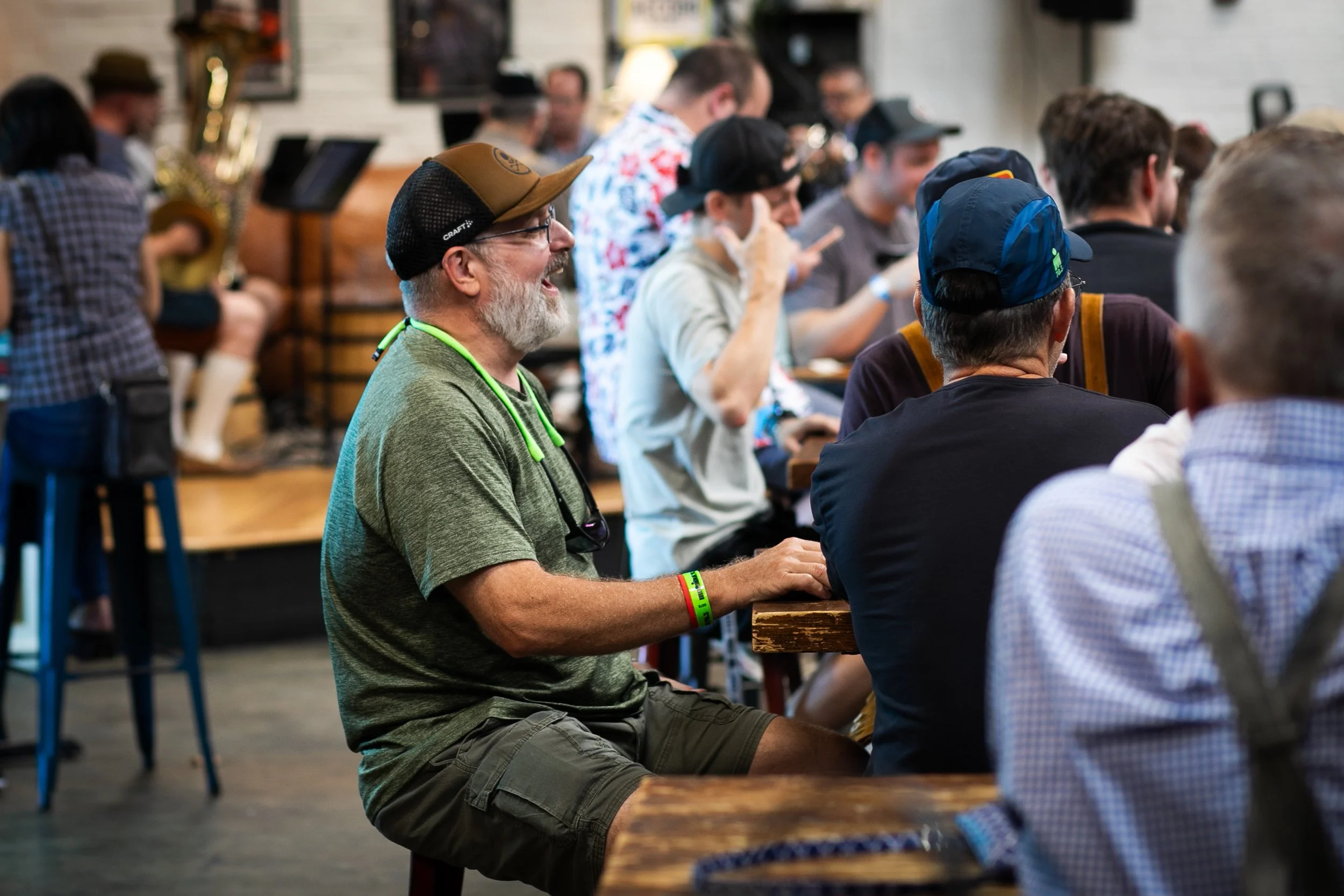
A couple hours into Savannah River Brewing’s 2026 Oktoberfest celebration, a group arrived that was, frankly, hard to miss.
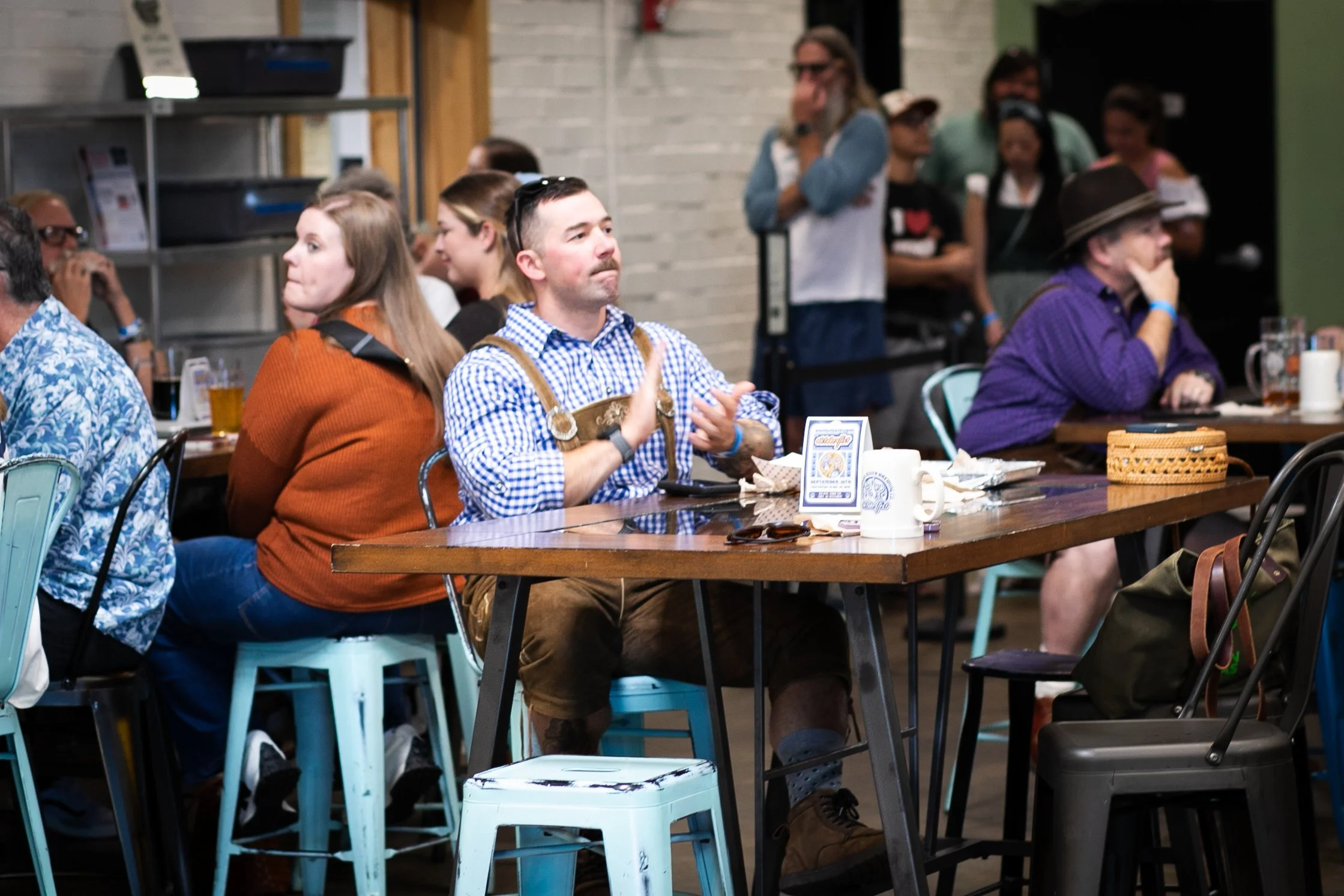
Dressed in wedding guest attire, they ordered their beers and found a table, soon disappearing into a sea of lederhosen, dirndls, shorts, jeans, and T-shirts. Ironically, for a group that stood out at first, their outfits were actually closer to the origins of Oktoberfest than they might have realized when they stopped in for a break. That’s because the celebration that we know today as a giant beer festival actually began as a royal wedding over 200 years ago.
The Origins of Oktoberfest
In October 1810, Bavaria’s King Maximilian I Joseph threw a party to celebrate his son Crown Prince Ludwig’s wedding to Princess Therese of Saxe-Hildburghausen. They invited Munich’s residents to celebrate on a meadow outside the city gates, with beer, food, music, dancing, and a horse race. The meadow was then named “Theresienwiese,” or Therese’s Meadow, in the bride’s honor. The festivities were such a hit that they gathered the following year again, and a new tradition was born. Theresienwiese remains home to the Oktoberfest celebration today.
The iconic brass sounds of Oktoberfest developed alongside instrument technology changes. Early European military bands leaned heavily on woodwinds, with horns and percussion also contributing. During the 1800s, new keys and valves made brass instruments more versatile (including the valved trumpet, horn, baritone, and tuba!) helping pave the way for the fuller bands we recognize today.
As the festival’s beer stalls gave way to large halls in the late 1800s, bands gained an expansive setting for their sound. Brass could carry across a crowd, while marches and dance tunes supplied a beat people could follow. The association between bands, beer and communal celebration grew from that shared setting.
Oktoberfest in America
After World War II, many U.S. troops were stationed in Germany, and their families often joined them, which gave plenty of Americans their first taste of the annual Oktoberfest. At the same time, according to Wine Enthusiast, an estimated 800,000 Germans immigrated to the U.S. between 1951 and 1970. Many brought the celebration with them as a way to stay connected to their heritage. One of the earliest American Oktoberfests took place in La Crosse, Wisconsin, in 1961, and the tradition has spread across the country ever since.
Savannah River Brewing’s Oktoberfest Celebration
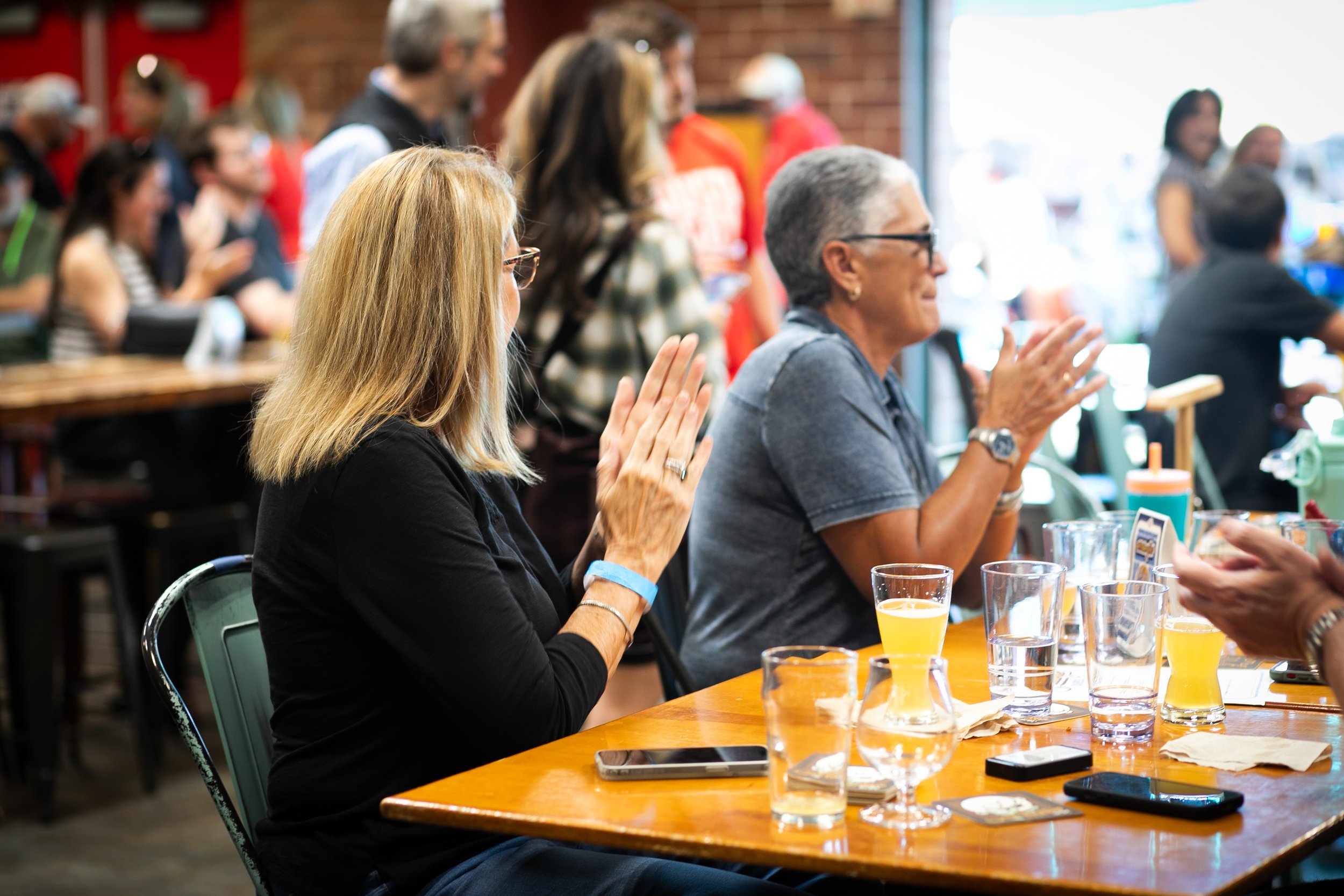
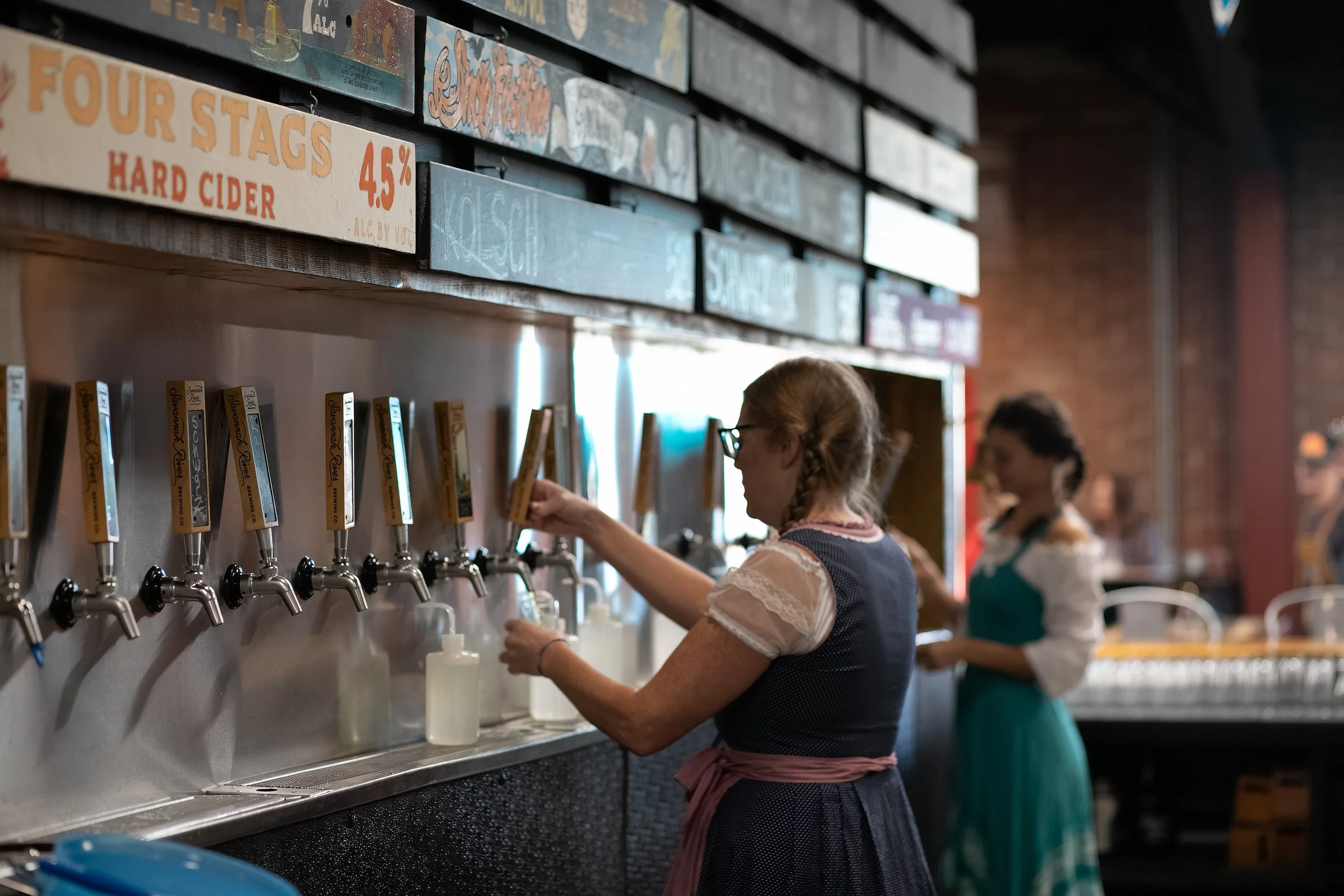
Here in Augusta, several bars and restaurants host their own Oktoberfest celebrations, including Savannah River Brewing. Festivalgoers sipped (and chugged, for a little friendly competition) a lineup of seasonal brews: Uncle Festbier (Oktoberfest lager), Oktoberfest Kölsch, Bavarian-style Hefeweizen, Maibock (German amber lager), Rauchbier (German amber lager), Dunkelweizen (German dark wheat), and Schwarzbier (German dark lager).
Plates were piled high with German staples like Bavarian pretzels, bratwurst, and our favorite dish of the day: the Jägerschnitzel platter, smothered in a savory mushroom-onion gravy. In German, Schnitzel means "cutlet" or "slice." The most famous version is the Wiener Schnitzel, a thin, breaded veal cutlet that appears in Viennese cookbooks as early as the 1830s. It's such a treasured recipe that in Austria, a dish can only be called "Wiener Schnitzel" if it's made with veal.
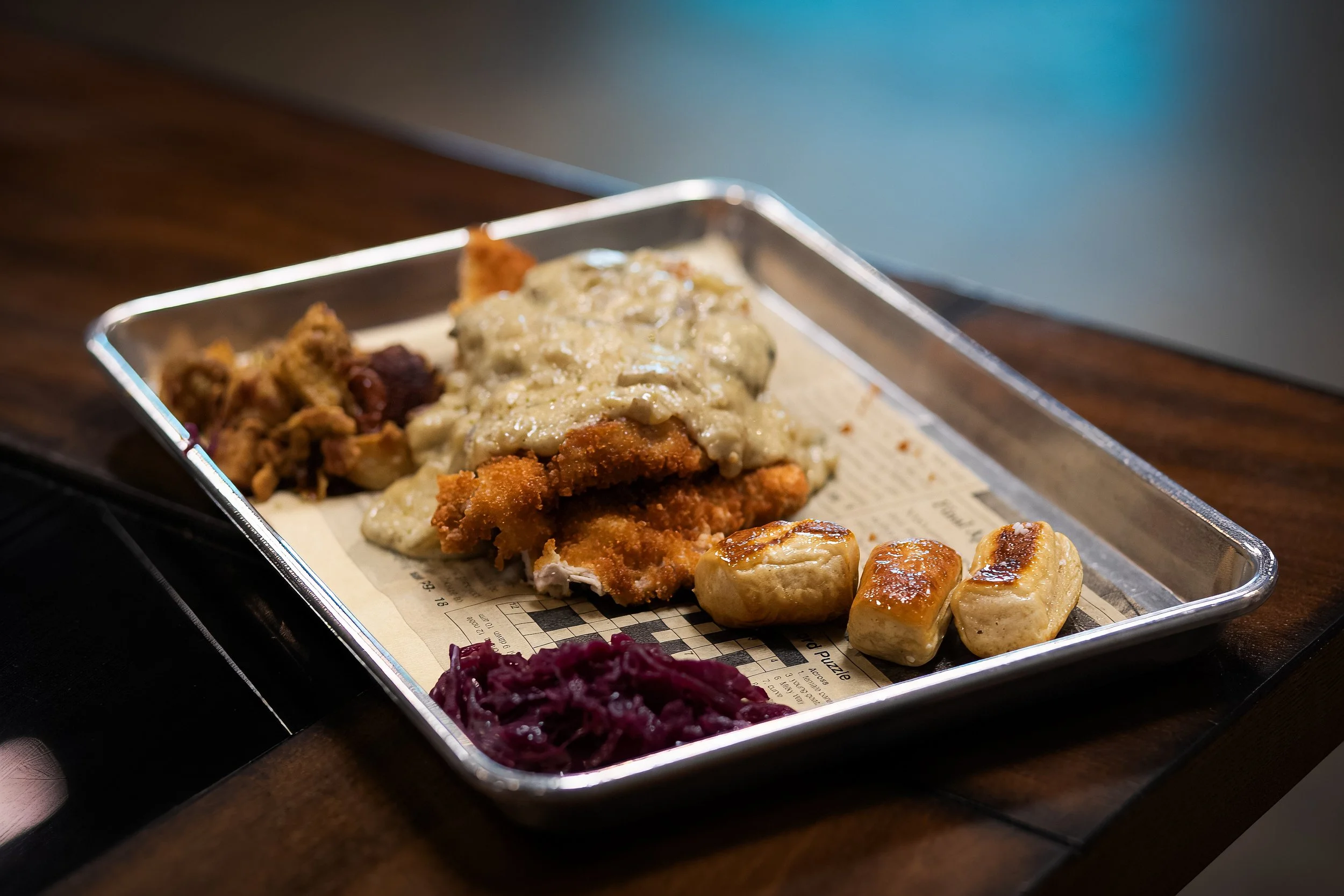
Jägerschnitzel (often spelled jagerschnitzel), which translates to "hunter's schnitzel," comes from Germany. It's made with veal or pork and topped with a mushroom sauce, usually creamy, though some versions use tomato.
Over the decades, schnitzel has traveled far beyond Austria and Germany. Ashkenazi Jews brought a kosher version made with chicken to Israel and the United States as they emigrated from Eastern Europe. Veal and beef can be kosher, but they were expensive, and chicken proved to be a delicious, affordable alternative that has stuck around ever since. The cooking fat is different too. Austrian and German schnitzels are traditionally fried in butter, while Jewish schnitzel is fried in oil, because kosher law doesn't allow meat and dairy to be combined. No matter how you prepare this meal, it’s delicious. We both still remember the smell of breaded cutlets frying in Jerusalem, alongside fresh challah and falafel, and loved learning more about this dish's history in all its forms for this Oktoberfest story.
Oompah in Augusta
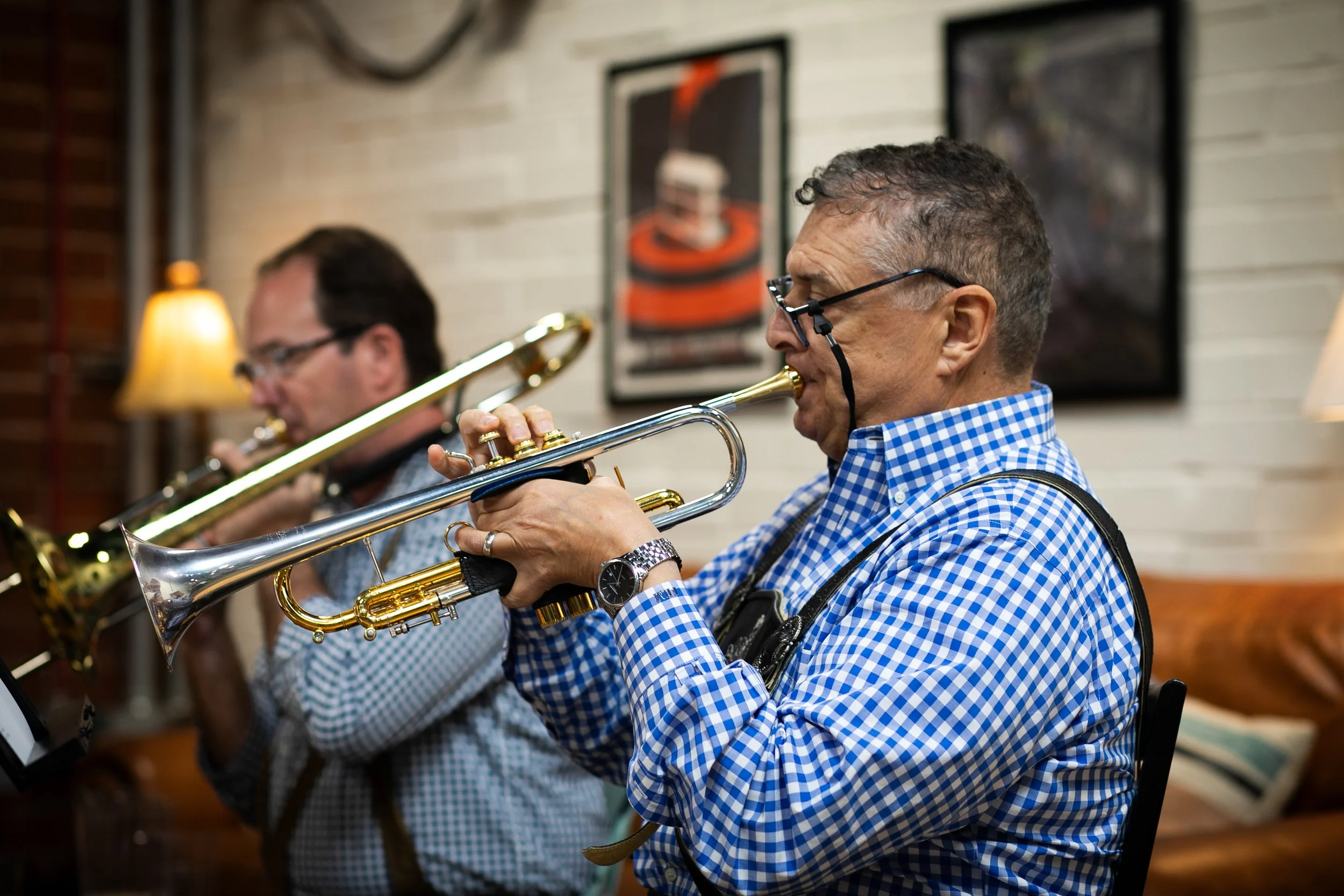
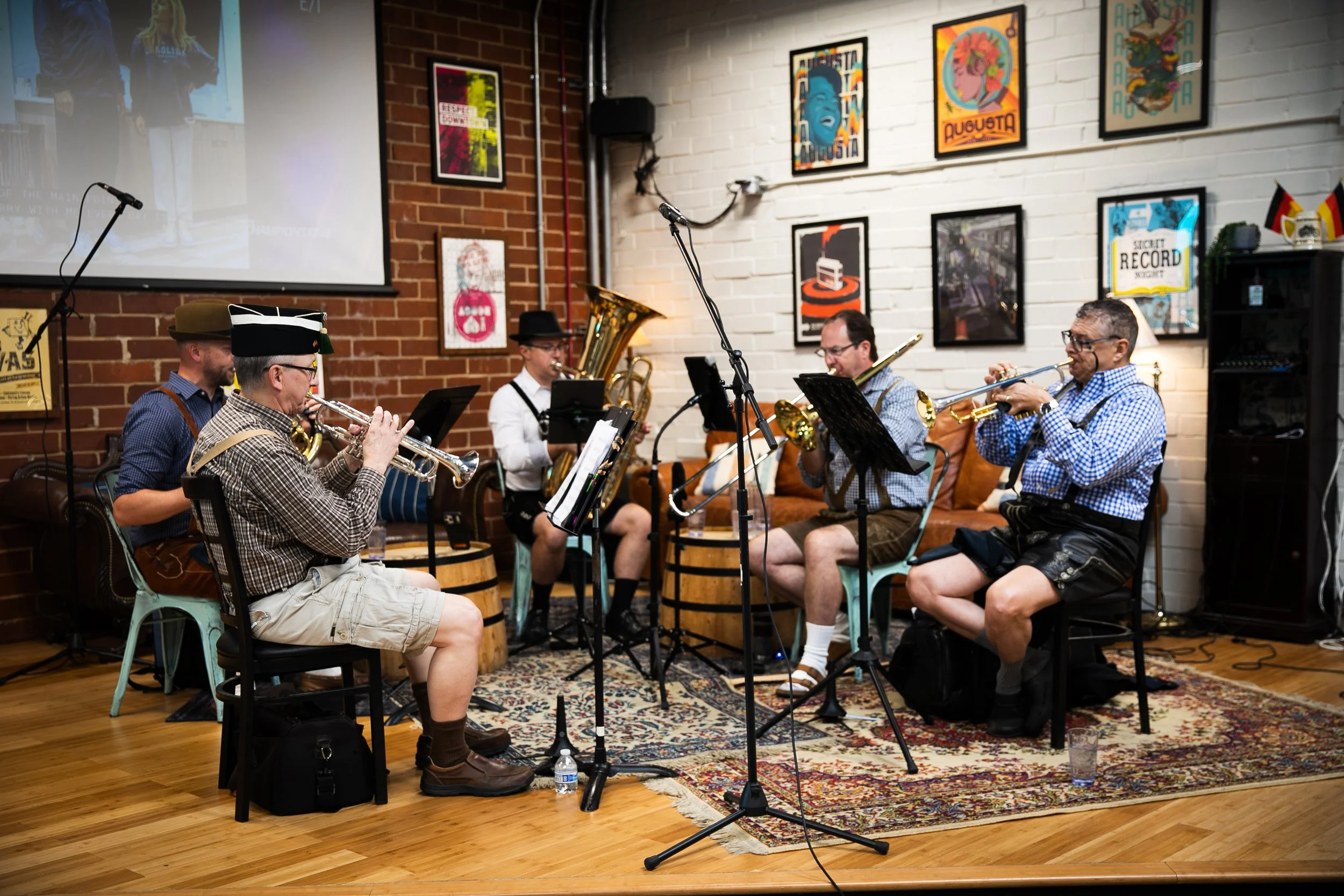
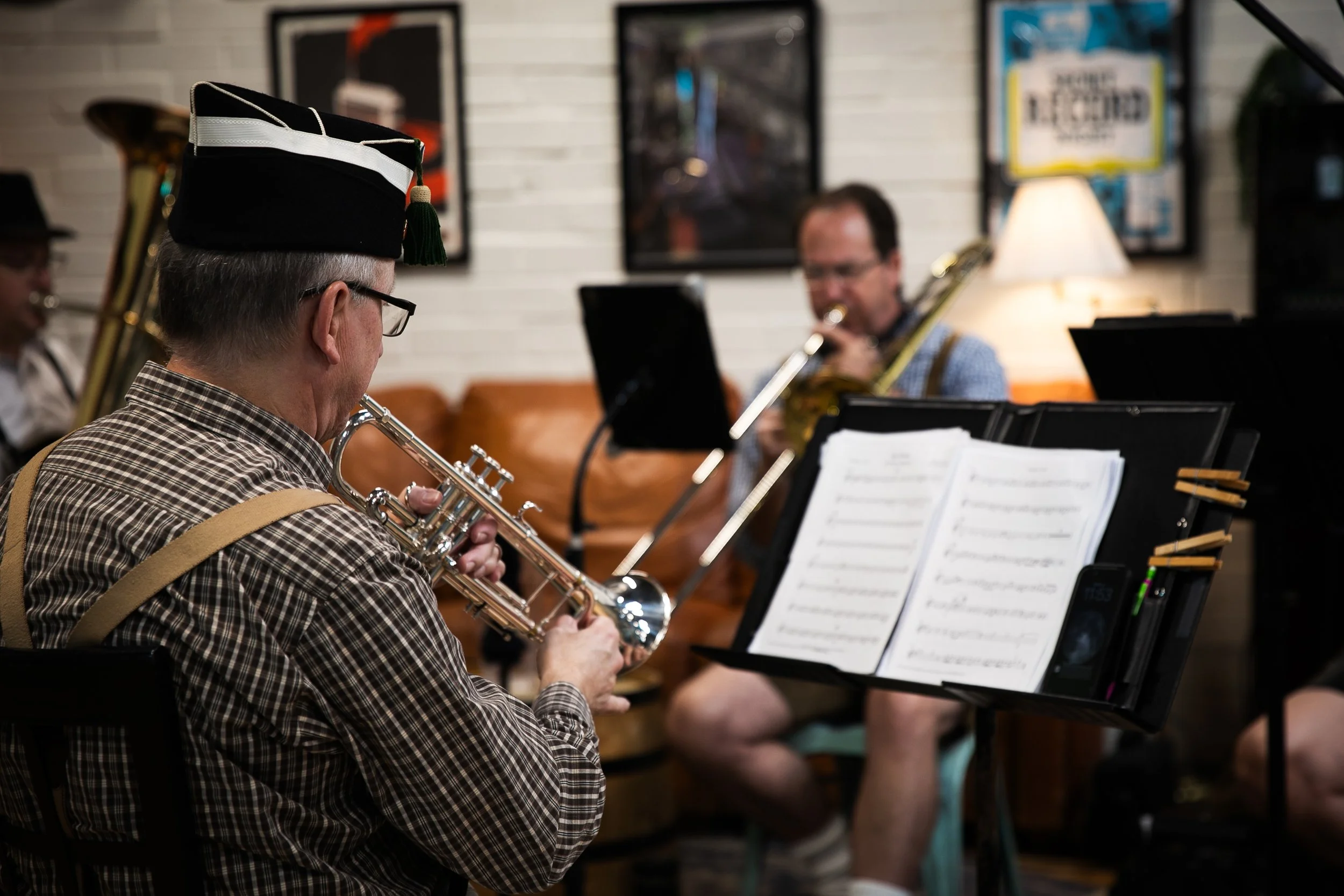
Of course, it wouldn’t be Oktoberfest without the sounds of brass polka music filling the air at Savannah River Brewing. Often referred to as “oompah” polka music is driven by a rhythmic effect of a low sound on the beat (the oom), followed by short, off-beat notes (the pah). The tuba anchors the bass, while other instruments supply chords and melody. Traditional ensembles feature trumpets and flugelhorns, trombones, tenor horns and percussion; woodwinds such as clarinets can add a nimble upper voice. Accordions also appear, particularly in smaller groups.
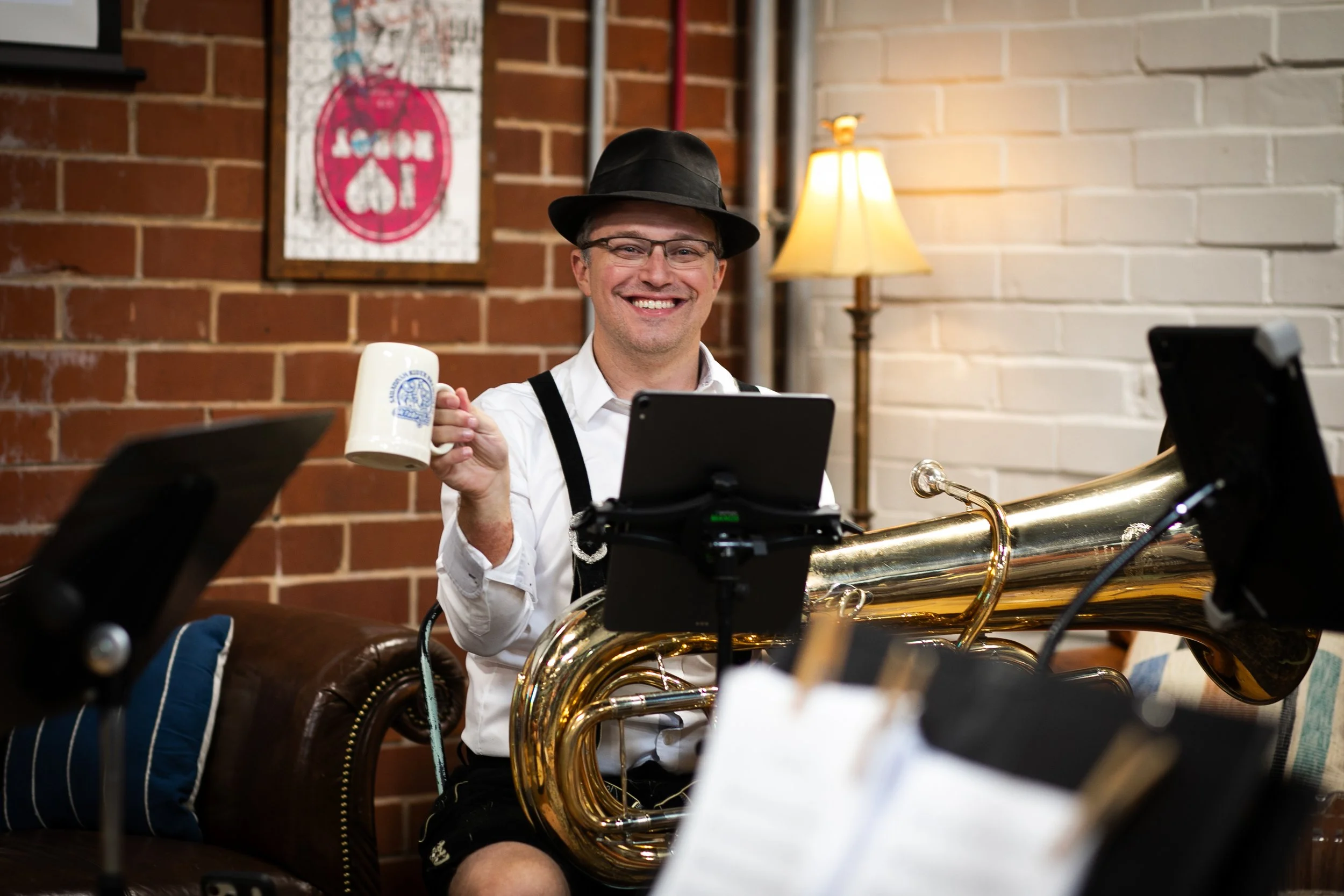
This year, Isaac made his lederhosen debut as the tubist with the Savannah River BrassWorks at SRB’s Oktoberfest celebration!
The soundtrack of Oktoberfest is iconic, with traditional polkas, waltzes and marches (often based on popular or folk songs from the 1800s), being the core of the setlist. Savannah River BrassWorks brought some of the staples, including “Ein Prosit der Gemütlichkeit” to SRB, along with many original polkas and waltzes by longtime local musician, composer, and founding member of Savannah River BrassWorks, Rudy Volkmann.
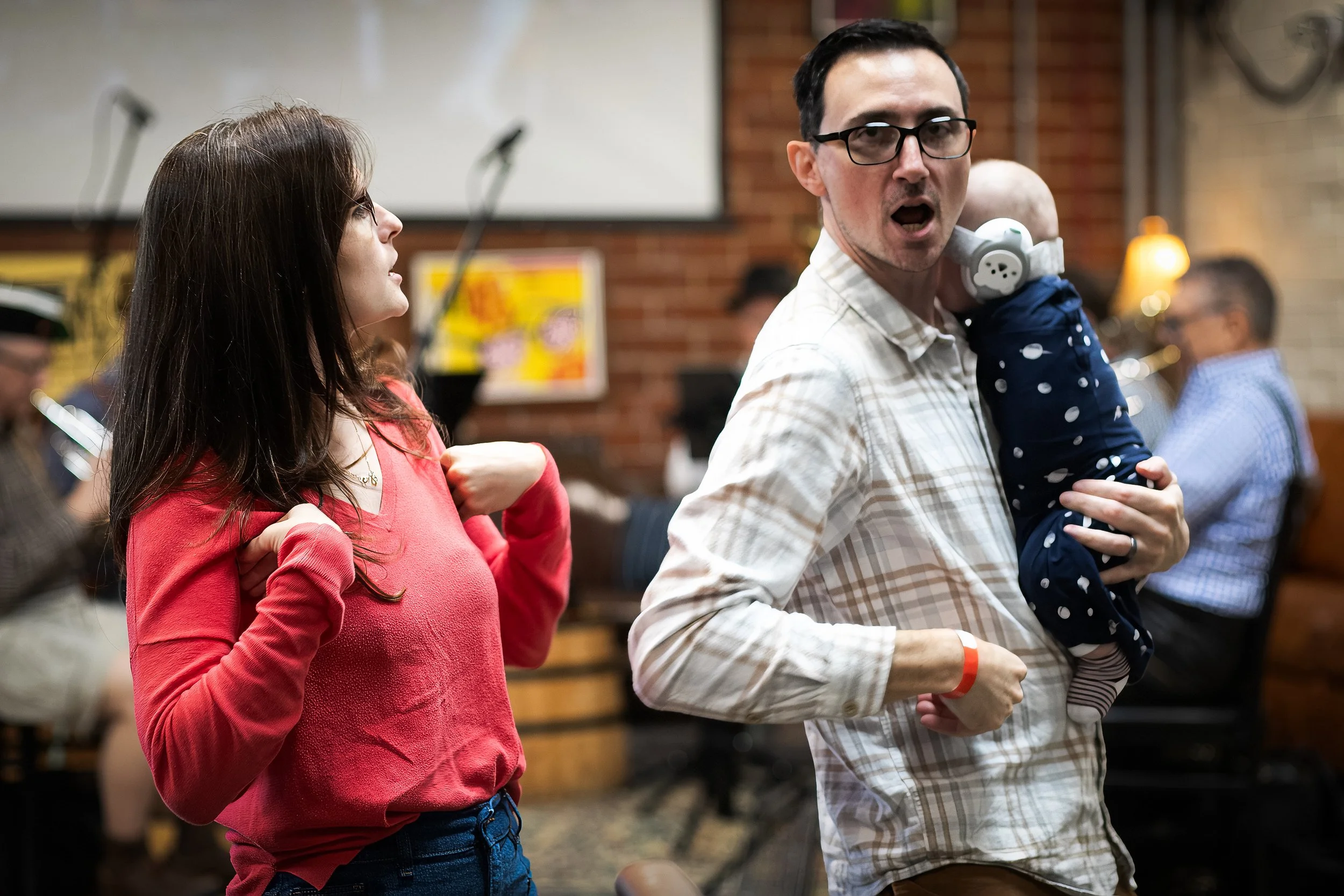
Some of the tunes, like “The Chicken Dance” encourage audience dancing and clapping, which adds to the communal atmosphere of an Oktoberfest celebration. In a modern twist, Savannah River BrassWorks ended with a polka version of “YMCA” that encapsulates the traditions of Oktoberfest meeting a modern American disco dance/sing along.
Raise a Stein
From the polka-fied YMCA to the sea of lederhosen, dirndls, and modern clothes, Savannah River Brewing proved you don’t have to be in Munich to get a taste of tradition. With German-inspired plates, plenty of beer, live music and an even livelier crowd, Augusta brewed up its own spin on Oktoberfest… and we’re happy to raise a stein to it.
Prost!